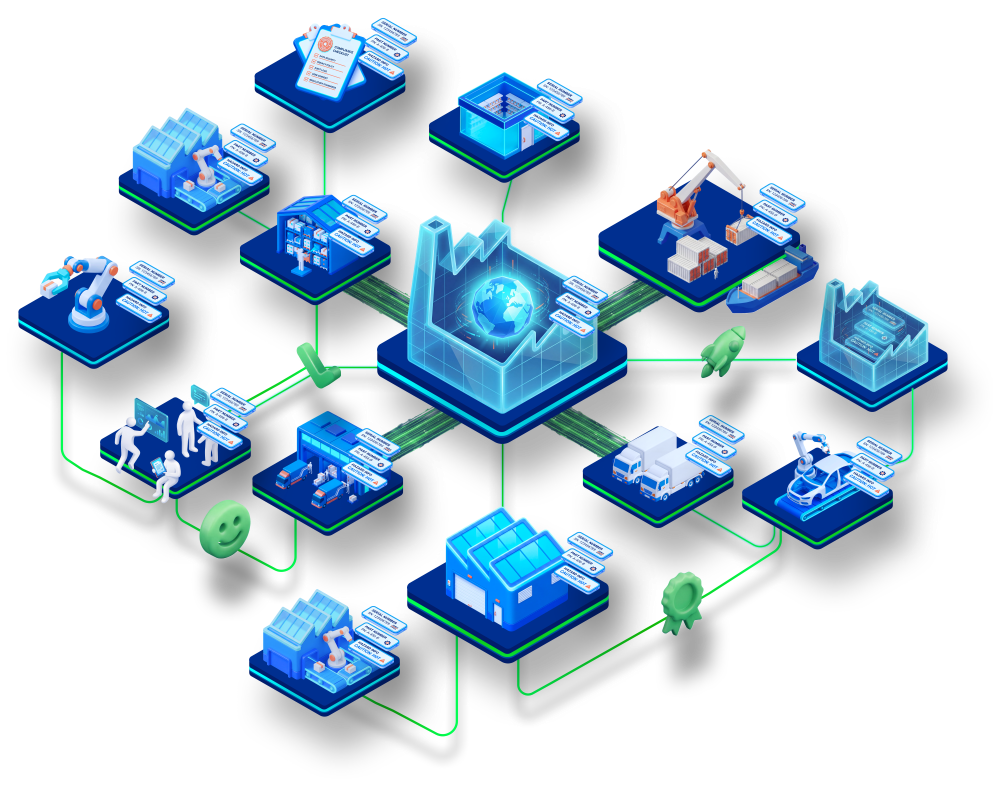
Every product, package, label, shipment, and supplier handoff needs consistent, accurate product information. As supply chains become more connected, that information moves with greater speed than ever before. Yet many organizations still rely on a mix of local processes, disconnected systems, and supplier-specific approaches to manage critical data.
Standardization provides the foundation to bring that complexity under control. It establishes a common operating model for product information, enabling organizations to improve accuracy, strengthen compliance, streamline collaboration, and scale operations with confidence. For supply chain leaders, standardization is no longer just an operational initiative. It is a strategic enabler of connected supply chains.
Organizations have invested heavily in digital transformation across manufacturing, logistics, procurement, and supplier operations. Yet the handling of the product information across departments or trading partners often remains in standalone processes developed over time to meet local requirements and immediate business needs.
Within each silo, these approaches may be effective. However, as operations expand across regions, suppliers, product lines, and regulations, maintaining consistency across processes becomes increasingly complex. Information must be shared accurately, updates must be applied consistently, and every participant in the supply chain must work from trusted data.
This challenge becomes visible in everyday operations:
These challenges are rarely caused by a lack of planning or effort. More often, they reflect the complexity of coordinating product information across a growing network of systems and stakeholders.
Getting enterprise-wide product information right across the connected supply chain is the challenge.
Even when current processes appear to be functioning effectively, variation across systems, facilities, and suppliers often creates operational friction that is difficult to measure directly.
That friction can appear in many forms:
Over time, these activities contribute to total cost of ownership (TCO) and consume valuable resources that could otherwise support growth and innovation.
Standardization is often associated with process control, governance, or operational consistency. While those outcomes are important, they only tell part of the story.
That’s because standardization is ultimately about control across an enterprise. For executive leaders, it becomes the common foundation for product information to move accurately across the enterprise, supporting local requirements, supplier relationships, and evolving regulatory demands.
Rather than limiting flexibility, standardization enables organizations to adapt faster. Teams spend less time reconciling information and more time improving operations, supporting growth initiatives, and responding to change. Operating cost is reduced across the enterprise.
Often, organizations treat supplier collaboration, traceability, automation, and compliance modernization as separate initiatives, or at least managed in different parts of an organization. In practice, these capabilities are built on the same foundation of standardized product information.
In order to extend the value of a standardized information foundation, organizations can extend their efficiency across three stages:
These stages reflect how leading organizations mature their product information strategies. Standardization creates consistency. Consistency creates visibility. Visibility creates opportunities for broader collaboration and business transformation.
Standardization works best on a shared or integrated platform, to help organizations move from managing product information locally, in multiple instances, to governing it consistently across the enterprise.
When product information is managed through a shared operating model, organizations can:
The value extends beyond operational efficiency. Organizations gain the ability to respond more effectively as regulatory expectations evolve, supplier networks expand, and business requirements change.
The next stage of supply chain transformation is not simply better internal execution. It is broader collaboration across suppliers, manufacturing partners, logistics providers, and other stakeholders.
That collaboration depends on a shared foundation of trusted information. When product information is standardized, organizations can connect processes more effectively, improve visibility across partners, and create a more coordinated operating environment.
This is where initiatives such as Loftware Connect become increasingly relevant. Once organizations establish standardized product information processes, they can extend that consistency beyond the enterprise and into supplier collaboration workflows. The result is a more connected ecosystem built on shared data, common standards, and greater operational alignment.
Standardization is clarity: It creates an environment for consistency and control that brings more efficiency to modern supply chains.
As organizations look to improve operational performance, strengthen compliance, and scale collaboration across an expanding supply network of partners, it’s consistent product identification that is a strategic asset. Standardization provides the foundation that makes those outcomes possible.
For leaders focused on building more connected supply chains, standardization is a best practice. It is the foundation that enables sustainable growth, operational control, and effective collaboration across the enterprise and beyond.